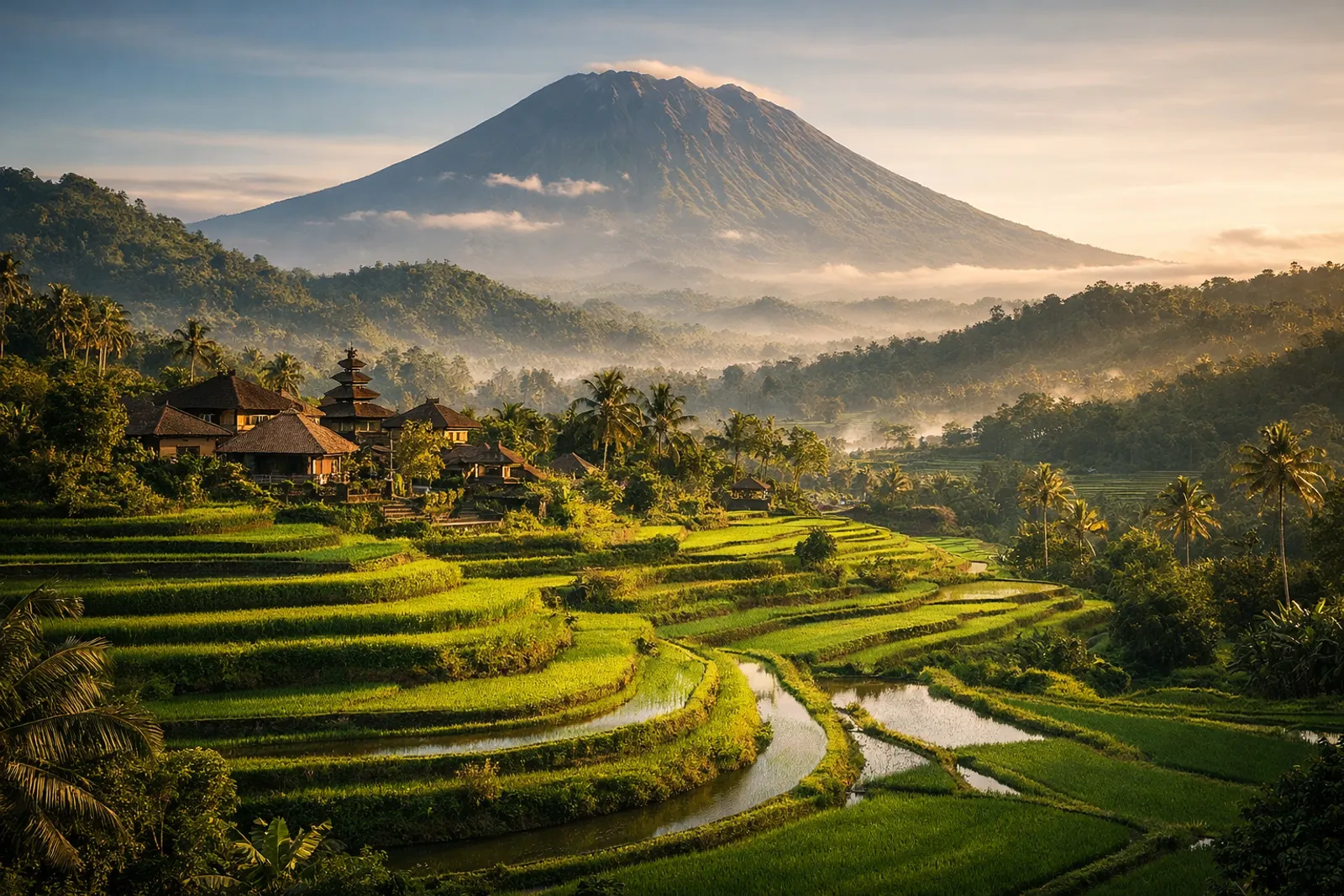
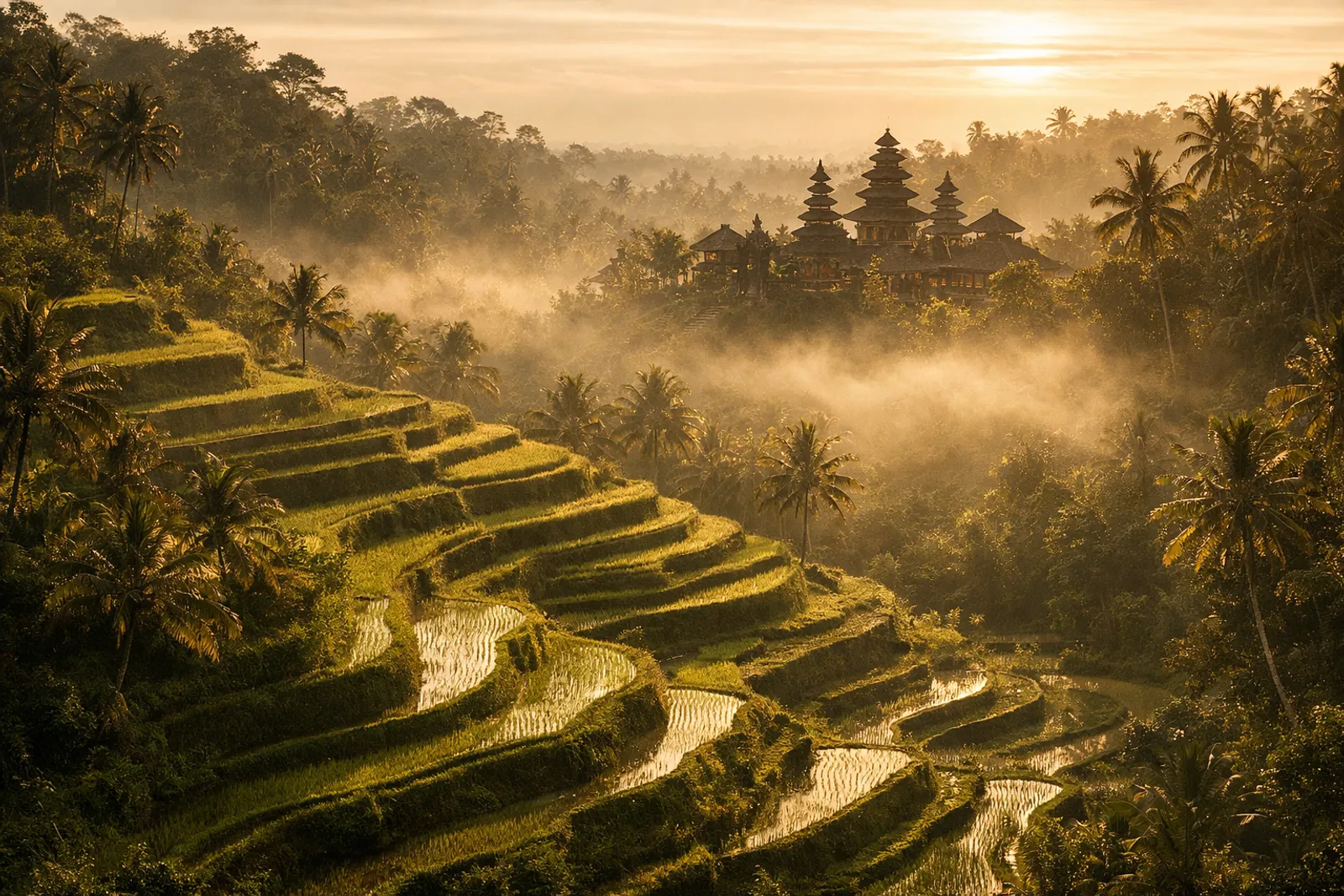
Bali's rice terraces are among the most visually stunning agricultural landscapes on earth — cascading emerald stairways carved into volcanic hillsides over centuries by generations of Balinese farmers using a cooperative irrigation system called subak that UNESCO has recognized as a Cultural Landscape of outstanding universal value. These terraces are not merely beautiful scenery — they are living monuments to a sophisticated system of water management, community cooperation, and spiritual practice that has sustained Balinese civilization for over a thousand years. The subak system, governed by water temples and democratic farmer councils, distributes water from mountain lakes and rivers through an intricate network of canals, tunnels, and weirs that ensures every paddy field receives its fair share regardless of elevation or distance from the source.
Bali Malayali considers the rice terraces to be one of the island's most essential experiences, representing the intersection of natural beauty, cultural heritage, and living tradition that makes Bali so extraordinary. Our team has explored rice terrace landscapes across the island — from the famous Tegallalang near Ubud to the vast UNESCO-protected Jatiluwih system in Tabanan, from the dramatic valleys of Sidemen in East Bali to hidden paddies that most tourists never discover. We know the best times to visit for different photographic conditions, the trekking routes that reveal the most spectacular viewpoints, and the cultural context that transforms a rice terrace visit from pretty scenery into genuine understanding.
Whether you want to walk along narrow terrace ridges at sunrise, photograph the iconic layered landscapes, learn about traditional Balinese agriculture, or simply sit with a coffee overlooking an impossibly green panorama, this Bali Malayali guide covers every rice terrace experience the island has to offer.