Trek & Explore

Bali Hiking & Trekking Guide — Volcanoes, Ridges & Jungle Trails

By Adhil P Bhaskaran, Founder Updated April 2026 8 min read

Beyond the beaches and rice paddies, Bali offers a surprising wealth of hiking and trekking experiences that take you through volcanic landscapes, dense tropical jungle, traditional villages, and highland terrain that reveals an entirely different side of the island. From the pre-dawn summit push up Mount Batur to watch the sunrise from the crater rim at 1,717 meters, to the challenging full-day ascent of the sacred Mount Agung at 3,031 meters — Bali's highest and holiest peak — the island provides trekking adventures that range from gentle morning strolls to genuine mountain expeditions that test your fitness and resolve.

Bali Malayali has hiked every major trail on the island to provide this guide with firsthand accuracy. Our team has summited Batur in driving rain and under crystal-clear skies, attempted Agung in multiple seasons, explored the jungle trails of the western highlands, and discovered footpaths through rice terraces and villages that no guidebook has documented. We evaluate each trek on difficulty, scenery, cultural interest, safety considerations, and the quality of available guides, because honest assessment is more valuable than promotional enthusiasm when you are deciding how to spend your precious holiday time and energy.

Whether you are a casual walker seeking gentle trails with beautiful views, an intermediate hiker looking for half-day adventures, or a serious trekker wanting to conquer volcanic summits, Bali Malayali provides everything you need to plan safe, rewarding hiking experiences across this remarkably diverse island.

Mount Batur Sunrise Trek

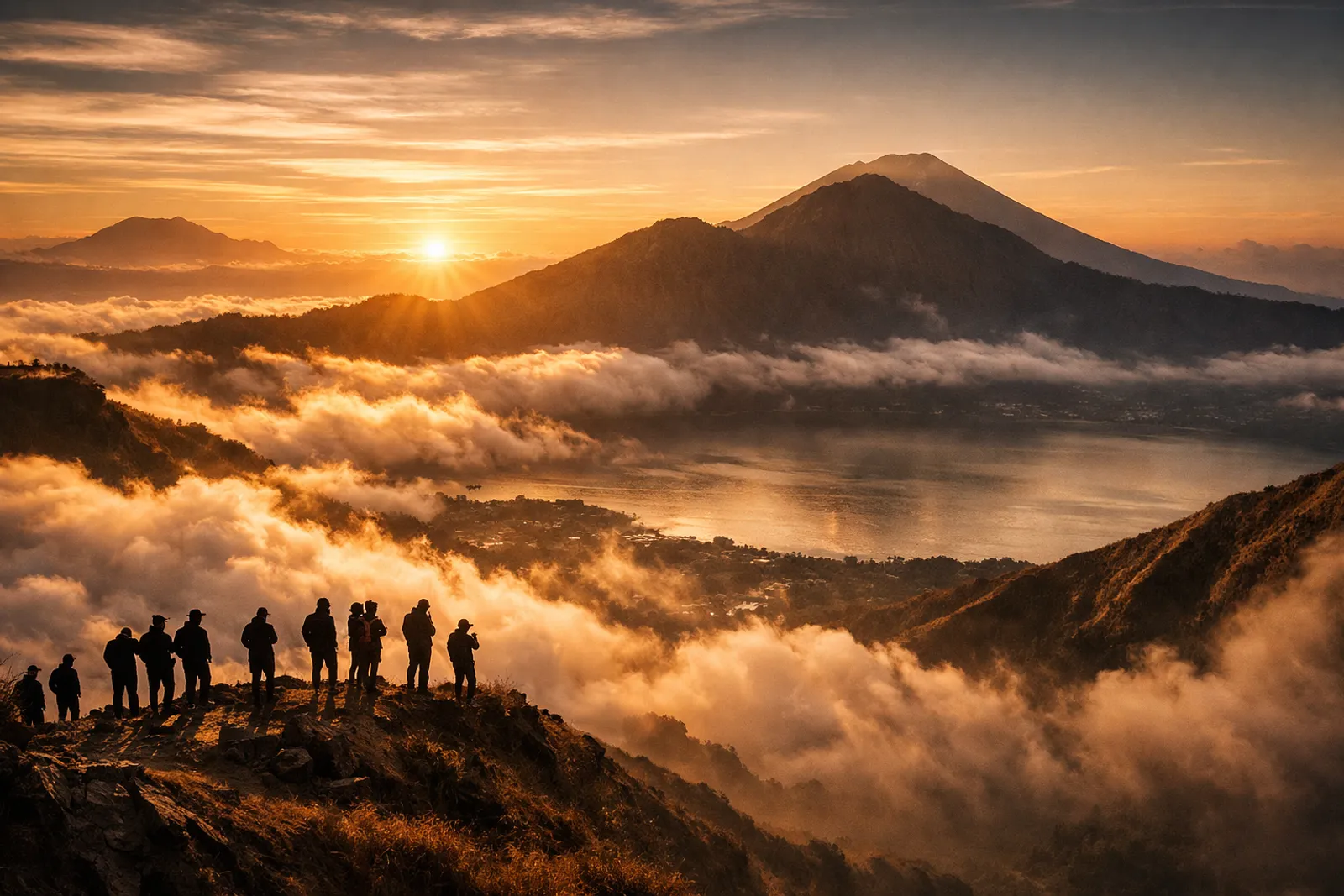
The Mount Batur sunrise trek is Bali's most popular hiking experience and one of the island's most unforgettable activities. Starting from Toya Bungkah village at around 3:30am, the trek ascends 700 meters over approximately two hours through volcanic terrain — initially on paved paths through forest, then on loose volcanic scree and rock as you approach the 1,717-meter summit. The trail is well-worn and non-technical, but the pre-dawn start, loose footing, and altitude make it moderately challenging for those unused to hiking. A headlamp is essential for the dark initial stages. The reward at the summit is magnificent — watching the sun rise above a sea of clouds with Lake Batur shimmering below and Mount Agung's majestic cone dominating the eastern horizon. After sunrise, guides cook breakfast using volcanic steam vents on the crater rim, adding a surreal dimension to the experience. A local guide is mandatory (organized through your accommodation or trekking association) and costs approximately $40-60 per person including transport from Ubud. Dress in warm layers as summit temperatures can drop to 10 degrees Celsius before sunrise.

Mount Agung — Bali's Sacred Summit

Mount Agung is Bali's highest peak at 3,031 meters and its most sacred mountain — the spiritual center of Balinese Hinduism believed to be a replica of Mount Meru, the cosmic axis of the universe. Climbing Agung is a serious undertaking that demands good fitness, proper preparation, and respect for both the mountain and its spiritual significance. Two routes are commonly offered: the shorter but steeper Pasar Agung route (5-7 hours round trip, reaching the crater rim at approximately 2,900 meters) and the longer Besakih route (10-12 hours round trip, reaching the true summit). Both routes start well before midnight (typically 11pm-1am) to reach the top for sunrise. The terrain is steep, loose, and requires scrambling over volcanic rock in the dark. Altitude effects are rarely severe but can include headaches and breathlessness. A certified guide is mandatory and should be arranged through the Trekking Guides Association to ensure fair wages and proper safety standards. The summit views — overlooking the entire island, the Lombok Strait, and Mount Rinjani — are genuinely extraordinary on clear days.

Easy Walks & Nature Trails

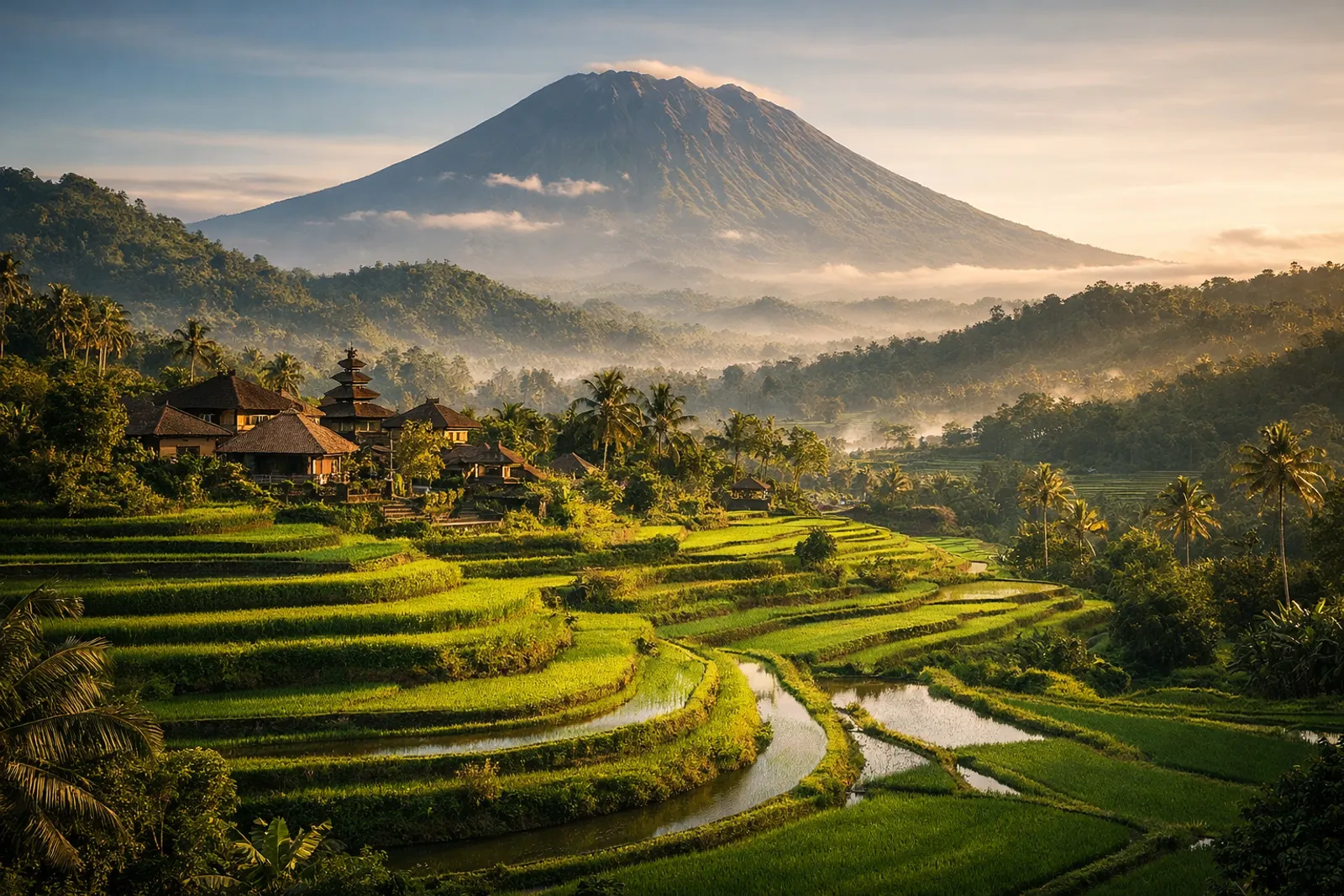
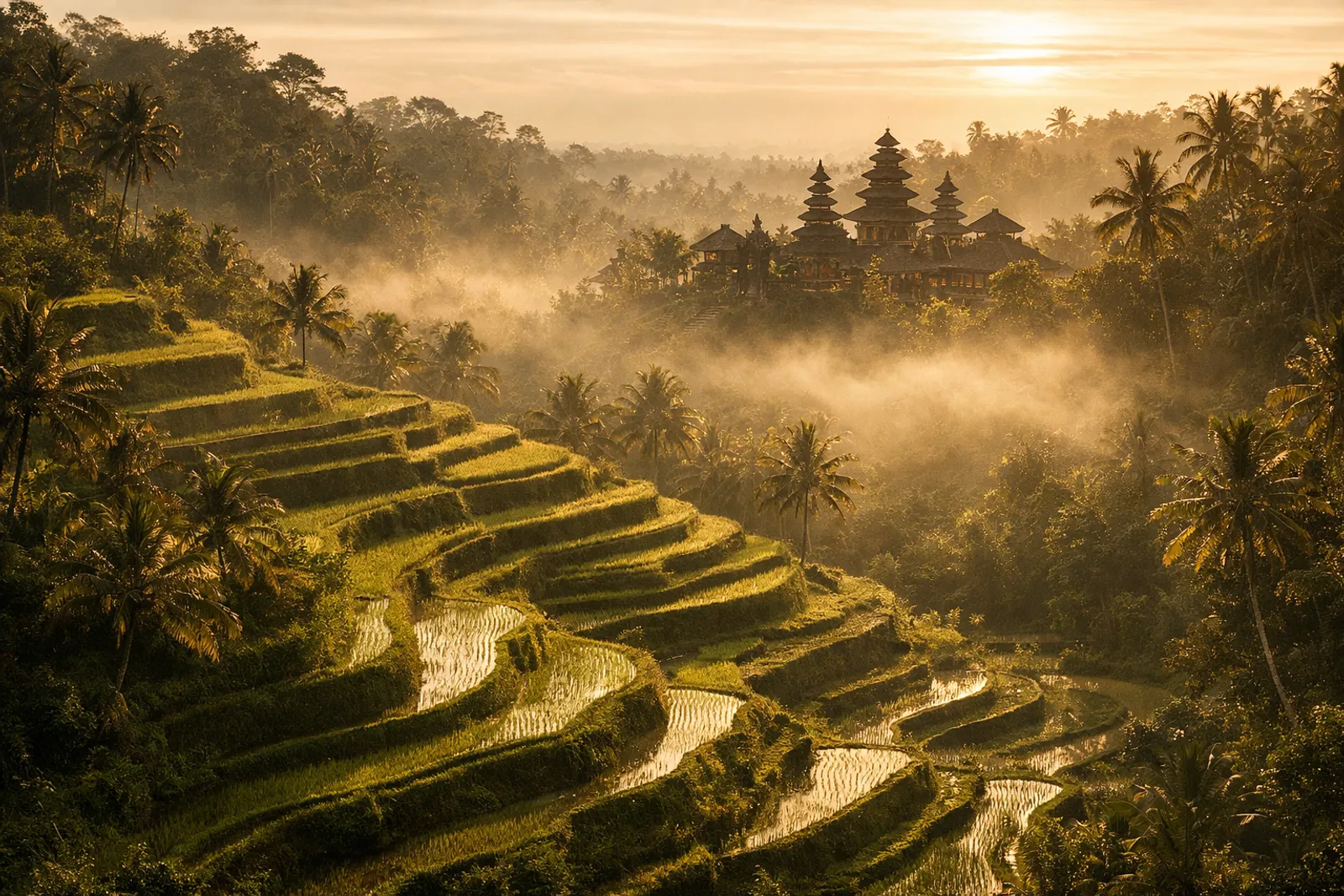
Not every hiking experience in Bali requires predawn wake-up calls and volcanic scrambles. Campuhan Ridge Walk in Ubud is a gentle, paved path along a narrow hill between two lush valleys that takes about 30-45 minutes each way and offers beautiful views of palm-fringed ridges and morning mist — it is best done at sunrise before the heat builds. The Tirta Gangga rice terrace walks in East Bali follow irrigation channels through picturesque paddies with Mount Agung as a backdrop, with routes ranging from 30 minutes to three hours. Munduk village in North Bali has several marked trails through coffee plantations, rainforest, and past waterfalls that range from easy to moderate difficulty. The Jatiluwih rice terrace walking paths in Tabanan wind through UNESCO-protected subak landscapes on flat to gently undulating terrain. Mangrove boardwalks in the Benoa mangrove forest provide easy, flat walking with birdwatching opportunities. Ubud's Monkey Forest contains shaded walking paths through ancient banyan trees that offer cool respite on hot days. These gentler options deliver genuine natural beauty without physical demands.

Jungle & Waterfall Treks

Bali's interior jungle offers immersive trekking experiences through dense tropical vegetation that feels worlds away from the tourist coastal strip. The West Bali National Park contains jungle trails that range from easy coastal walks to multi-day treks through pristine monsoon forest, with the chance to spot endangered Bali starlings, deer, and wild boar — guides are mandatory and arranged through the park office in Cekik. The jungle trail connecting Munduk and Gobleg waterfalls in North Bali traverses clove and coffee plantations, crosses rivers, and passes through patches of primary forest over 3-4 hours, with multiple waterfalls providing refreshing rest stops. The Sambangan Secret Garden trek in North Bali follows a river through jungle to a series of waterfalls, natural slides, and swimming holes — this is one of Bali's best adventure treks, combining hiking with swimming and cliff jumping. The trek from Sidemen to the traditional village of Iseh passes through some of East Bali's most beautiful landscapes, with rice terraces, river valleys, and Mount Agung views throughout.

Essential Trekking Tips & Safety

Proper preparation makes the difference between a rewarding trek and a miserable one in Bali's tropical conditions. Hydration is critical — carry at least 1.5 liters of water per person for half-day treks and 2-3 liters for full-day hikes, starting hydration the day before for volcano treks. Wear sturdy hiking shoes with good ankle support and grip for volcanic terrain, and broken-in trail runners for rice terrace and jungle walks. Start early to avoid the midday heat, which can be debilitating even at altitude. Apply sunscreen and insect repellent before setting out, and carry rain gear year-round as tropical showers can arrive with little warning. For volcano treks, dress in layers — temperatures at the summit of Batur and Agung are dramatically colder than the base, and wind chill adds to the cold during pre-dawn ascents. Always hire licensed local guides for volcano treks — this is mandatory for both Batur and Agung, supports local communities, and ensures safety on trails that can be confusing in the dark. Carry a headlamp with spare batteries, a basic first aid kit, and energy snacks. Inform your accommodation of your trekking plans and expected return time.

Frequently Asked Questions

How hard is the Mount Batur sunrise trek?

Mount Batur is moderately challenging — the trek covers about 5 kilometers with 700 meters of elevation gain over approximately two hours. The path is well-worn but involves loose volcanic scree near the summit. Reasonably fit adults and teenagers can complete it, though the predawn start (3:30am) and cold summit temperatures add difficulty. Wear warm layers and sturdy shoes. No technical climbing is involved.

Do I need a guide for hiking in Bali?

Guides are mandatory for Mount Batur and Mount Agung treks — you cannot access these mountains without a registered guide. For other trails like Campuhan Ridge Walk, Jatiluwih rice terraces, and most waterfall treks, guides are optional but recommended for remote jungle trails and less-marked routes. A guide costs $40-60 for Batur and $80-150 for Agung, including transport.

What should I bring for a volcano trek in Bali?

Essential items include sturdy hiking shoes, warm layers (fleece and windbreaker), headlamp with spare batteries, 2-3 liters of water, energy snacks, rain jacket, sunscreen, camera, and a small backpack. For Agung, add gloves and a warm hat. Wear moisture-wicking base layers rather than cotton. Your guide will typically provide breakfast on Batur. Start hydrating well the day before.

Is Mount Agung safe to climb?

Mount Agung is safe to climb when the volcano is not in an elevated alert status — always check the current volcanic activity level before planning. The trek itself is physically demanding but non-technical, though the steep terrain and altitude require good fitness. Use only certified guides arranged through the official trekking association. The mountain has deep spiritual significance — treat it with reverence and follow your guide's instructions completely.

Ready to Plan Your Bali Trip?

Our local team will craft a personalized itinerary tailored to your dates, preferences, and budget.

Plan My Trip on WhatsApp