Volcanic Adventure

East Java Guide — Mount Bromo & Kawah Ijen Adventure

By Adhil P Bhaskaran, Founder Updated April 2026 6 min read

East Java is home to two of Indonesia's most jaw-dropping natural wonders — Mount Bromo and Kawah Ijen — and together they form one of the most unforgettable adventure side trips you can add to a Bali holiday. Mount Bromo's otherworldly lunar landscape of the Tengger caldera, with its smoking volcanic cone rising from a sea of sand, is one of the most photographed scenes in all of Indonesia. Kawah Ijen's ethereal blue fire phenomenon and the world's largest acidic crater lake offer an experience unlike anything else on earth.

Bali Malayali designs East Java extensions that connect seamlessly with Bali itineraries, typically as a 3-4 day overland adventure from Bali's eastern coast through Java's volcanic heartland. The journey itself is part of the adventure — crossing the Bali Strait by ferry, driving through traditional Javanese villages and tobacco plantations, and ascending into the misty highlands where Java's volcanic spine dominates the horizon. It's a dramatic change of scenery from Bali's beach culture and offers a glimpse into a very different side of Indonesian life.

Both Bromo and Ijen require pre-dawn starts and moderate physical fitness, but the rewards are spectacular. Standing on the rim of Bromo's caldera as the sunrise paints the Tengger sand sea in golden light, or watching Ijen's blue flames dance in the pre-dawn darkness beside the turquoise acid lake, are moments that redefine your understanding of natural beauty. Bali Malayali handles all the logistics — transport, guides, accommodation, and timing — so you can focus purely on absorbing these incredible experiences.
Getting to East Java from Bali

The most common route from Bali to East Java starts with a drive to Gilimanuk port in west Bali (3-4 hours from south Bali), followed by a short 45-minute ferry crossing to Ketapang port in Java. From there, the journey to the Ijen area takes about 3-4 hours by car, and continuing to Bromo requires another 4-5 hours. Most travellers do this as an overland trip over 3-4 days: Day 1 travel to Ijen area, Day 2 Ijen blue fire trek, travel to Bromo area, Day 3 Bromo sunrise, then either return to Bali or fly out from Surabaya. Alternatively, you can fly from Bali to Surabaya (45 minutes) and approach Bromo first, then continue to Ijen and ferry back to Bali. Both routes work well, and Bali Malayali can design the optimal itinerary based on your schedule.

Mount Bromo — Sunrise Over the Tengger Caldera

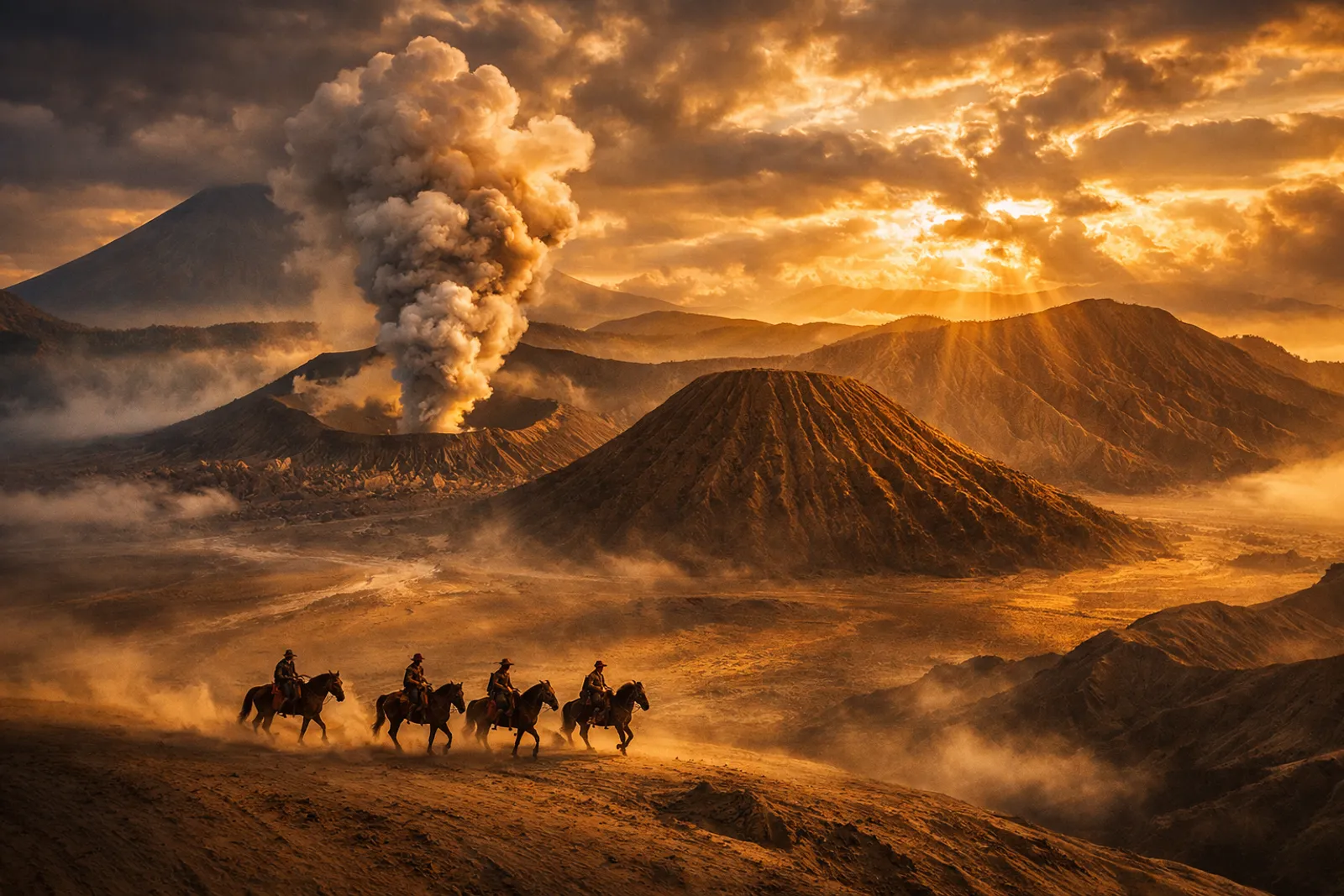
Mount Bromo sits within the massive Tengger caldera, a 10-kilometre-wide volcanic basin that contains multiple volcanic cones, a vast sea of volcanic sand, and several traditional Tenggerese villages. The classic Bromo experience starts at 3-4am, driving to the Penanjakan viewpoint (2,770m) to watch the sunrise illuminate the caldera from above. As dawn breaks, the scene is extraordinary — Mount Bromo's smoking cone, the perfect volcanic shape of Mount Batok beside it, and the vast sand sea stretching across the caldera floor, all framed by the distant silhouette of Mount Semeru, Java's highest peak. After sunrise, you descend to the caldera floor, walk or ride a horse across the sand sea to Bromo's base, then climb 250 concrete steps to the volcanic rim where you can peer into the active, smoking crater. The entire experience takes about 4-5 hours and requires warm clothing as temperatures at the viewpoint drop to 5-10°C.

01

Penanjakan viewpoint for sunrise

arrive by 5am

02

Sand sea crossing

walk (30 min) or horse ride (15 min)

03

250 steps to Bromo crater rim

04

Warm clothing essential

5-10°C at sunrise

05

Best months: April to October for clearest views

06

Entry fee: approximately IDR 320,000 for foreign visitors

07

Volcanic activity occasionally closes the crater rim trek

Kawah Ijen — Blue Fire and Acid Lake

Kawah Ijen is famous for two phenomena: the mesmerising blue fire that burns at the crater floor, and the stunning turquoise acid crater lake — the largest in the world. The trek begins at 1am from the Paltuding base camp, ascending 3 kilometres along a rocky path that takes 1.5-2 hours to the crater rim at 2,386 metres. From the rim, you descend into the crater on a steep, rough path to reach the area where sulphur deposits burn with an eerie blue flame. This blue fire is actually ignited sulphuric gas and is only visible in complete darkness, which is why the early start is necessary. As dawn breaks, the blue flames fade but the crater lake is revealed — a shocking turquoise body of water that is highly acidic with a pH of 0.5. The sulphur miners who carry impossibly heavy baskets of raw sulphur up from the crater are a humbling sight and a reminder of the extreme conditions some Indonesians work in daily.

Practical Tips for Bromo-Ijen Adventure

Both treks require moderate fitness — you don't need to be an athlete, but being comfortable with early mornings, walking uphill for 1-2 hours, and handling cold temperatures is important. The Ijen trek is more demanding than Bromo due to the steep crater descent and the noxious sulphur fumes at the bottom — bring a cloth or buy a simple gas mask at the base camp. Proper footwear with good ankle support and grip is essential for both treks. Headlamps or torches are necessary for the Ijen night trek. Warm layers are critical — thermal base layers, a fleece, and a windproof jacket are ideal. Accommodation near both locations ranges from basic but clean guesthouses to comfortable mid-range hotels. The food in East Java is different from Bali — try the local Javanese dishes like rawon (dark beef soup) and pecel (vegetables with peanut sauce). A local guide is mandatory for Ijen and highly recommended for Bromo.

Frequently Asked Questions

How many days do I need for Bromo and Ijen?

A minimum of 3 days and 2 nights is needed to visit both Bromo and Ijen from Bali. Day 1: travel from Bali to Ijen area. Day 2: Ijen blue fire trek at 1am, travel to Bromo area. Day 3: Bromo sunrise trek at 3am, return to Bali or fly from Surabaya. Four days allows a more comfortable pace with less driving fatigue.

Is the Ijen blue fire visible all year?

The blue fire at Ijen burns year-round as it is caused by continuous sulphuric gas emissions. However, it is only visible in darkness, which is why you must trek at 1am and arrive at the crater before dawn. Clear, dry conditions (April-October) offer the best visibility. Rain or heavy cloud can obscure the view during wet season months.

How difficult are the Bromo and Ijen treks?

Both treks are moderate difficulty. Bromo is easier — a short walk across flat sand and 250 steps to the rim. Ijen is harder — a 3km uphill trek in darkness followed by a steep descent into the crater. Reasonable fitness is sufficient for both. The main challenges are the early wake-up times, cold temperatures, and at Ijen, the strong sulphur fumes in the crater.

Can I do Bromo and Ijen in one day?

Technically possible but extremely exhausting and not recommended. You would need to start Ijen at 1am, finish by 7am, drive 4-5 hours to Bromo, and do the Bromo trek in the afternoon without the famous sunrise. It is far better to spread the experience over 2-3 days to enjoy both properly without extreme fatigue.

Ready to Plan Your Bali Trip?

Our local team will craft a personalized itinerary tailored to your dates, preferences, and budget.

Plan My Trip on WhatsApp