World's Best Diving

Raja Ampat Travel Guide — The World's Best Diving Destination

By Adhil P Bhaskaran, Founder Updated April 2026 5 min read

Raja Ampat is the crown jewel of Indonesian diving and arguably the most biodiverse marine environment on the planet. This remote archipelago of over 1,500 islands in West Papua province harbours 75% of all known coral species and more fish species than anywhere else on earth — a staggering concentration of marine life that has earned it the title of the global epicentre of underwater biodiversity. For divers, snorkellers, and marine life enthusiasts, Raja Ampat represents the ultimate bucket-list destination.

Bali Malayali helps adventurous travellers make the journey to this remote paradise, which requires more planning and commitment than a typical Bali holiday but rewards with experiences that redefine what you thought was possible underwater. The journey from Bali involves a flight to Sorong followed by a boat transfer, but once you arrive in Raja Ampat's turquoise waters, the outside world simply disappears. The islands are surrounded by water so clear and so teeming with life that even snorkelling from the dock of your homestay delivers encounters that would be extraordinary anywhere else.

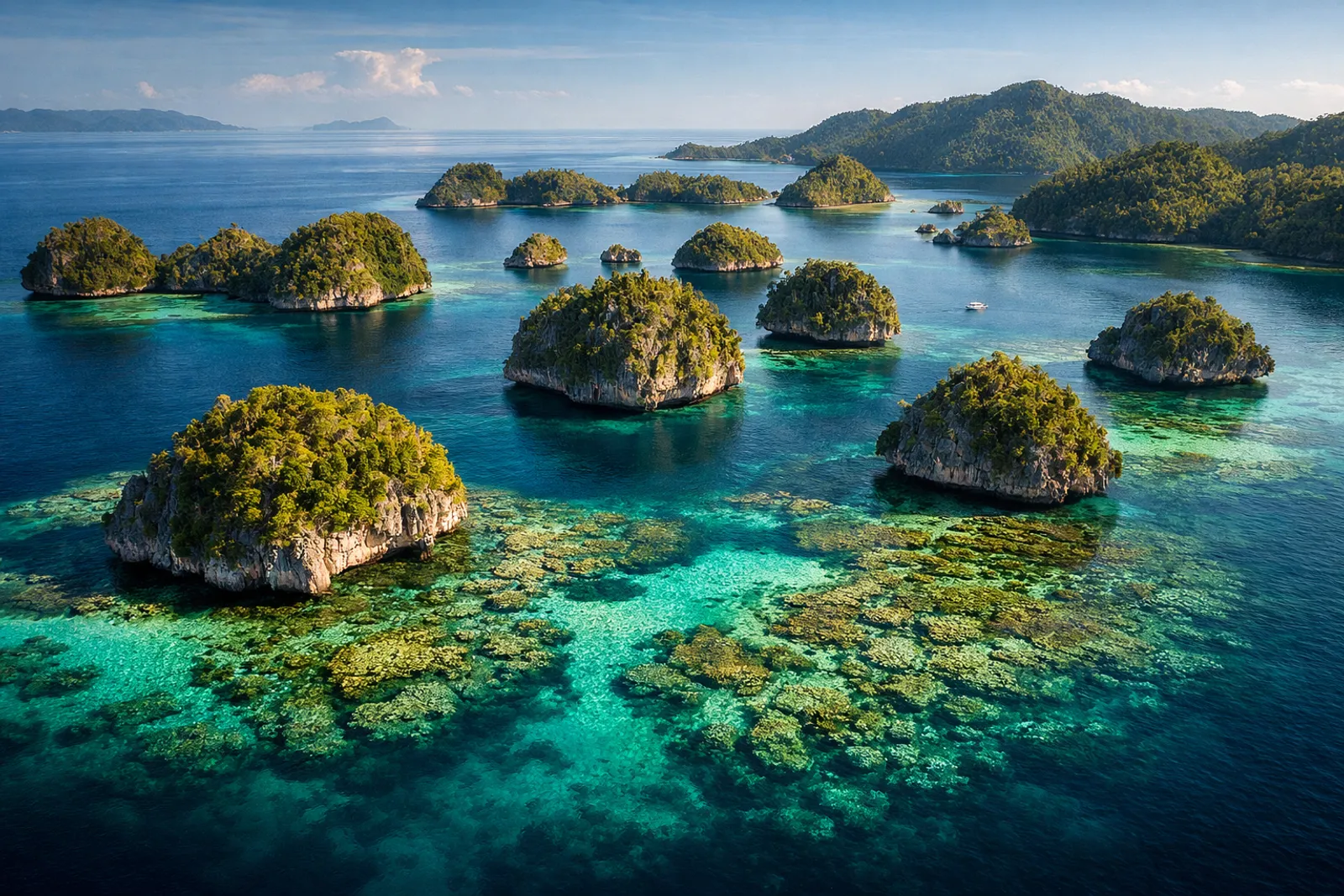
Beyond diving, Raja Ampat offers stunning karst island landscapes, traditional Papuan villages, pristine beaches, birdwatching including the rare Red Bird of Paradise, and a sense of genuine remoteness that is increasingly rare in our connected world. Bali Malayali designs Raja Ampat trips that balance underwater adventures with cultural encounters and above-water exploration, creating a complete experience of this extraordinary corner of Indonesia.
Getting to Raja Ampat — The Journey

Reaching Raja Ampat requires commitment but is straightforward with proper planning. From Bali, fly to Sorong in West Papua — direct flights take approximately 4-5 hours and are operated by Garuda Indonesia, Batik Air, and Lion Air. From Sorong, take a public ferry (2 hours, IDR 100,000) or charter a speedboat (1-2 hours, more expensive) to Waisai, the capital of Raja Ampat Regency. Your accommodation will typically arrange boat transfers from Waisai to their location. The entire journey from Bali takes about 8-10 hours including connections, so most travellers overnight in Sorong before continuing. Plan flights carefully as Sorong connections can be limited and delays are common in Papua. Arrive at least one day before your planned Raja Ampat entry to build in a buffer.

Diving in Raja Ampat — An Underwater Cathedral

Raja Ampat's diving statistics are mind-boggling. Marine surveys have recorded over 1,500 species of fish, 600 species of coral, and 700 species of mollusc within the archipelago — more than anywhere else on the planet. Famous dive sites include Cape Kri, which holds the world record for the most fish species counted on a single dive (374 species), Manta Sandy for reliable manta ray encounters, Blue Magic for an explosion of pelagic life including sharks and barracuda, and The Passage for a unique channel dive between two islands with soft coral walls and schooling sweetlips. Water temperatures range from 27-30°C year-round, and visibility averages 15-25 metres. Currents can be strong at some sites, so a minimum of Advanced Open Water certification is recommended, though some sites are suitable for beginners.

01

Cape Kri

world record fish species on a single dive

02

Manta Sandy

reliable manta ray encounters

03

Blue Magic

pelagic predators and schooling fish

04

The Passage

unique channel dive with soft corals

05

Melissa's Garden

pristine hard coral garden

06

Sardine Reef

massive schooling fish walls

07

Chicken Reef

macro photography paradise

Snorkelling — You Don't Need to Dive

Raja Ampat is one of the few world-class diving destinations where snorkelling is almost equally spectacular. Many of the best coral reefs start in just 1-2 metres of water, meaning you can float on the surface and witness incredible marine diversity without scuba equipment. Homestays and resorts often have house reefs accessible directly from shore where you'll see reef sharks, sea turtles, schools of tropical fish, and coral formations that are simply jaw-dropping. The famous Arborek jetty is renowned among snorkellers for its juvenile blacktip reef sharks and vibrant coral just off the village dock. Friwen Wall offers world-class snorkelling along a coral-encrusted wall teeming with fish. Sawandarek Jetty is another accessible spot where you can spend hours mesmerised by the underwater show. Non-divers are absolutely not second-class citizens in Raja Ampat.

Accommodation and Costs

Raja Ampat accommodation ranges from basic but charming local homestays to luxury eco-resorts. Homestays cost approximately $40-80 per person per night including three meals and are run by local Papuan families — they offer an authentic cultural experience and directly support the local community. Mid-range dive resorts charge $150-300 per night including meals and diving packages. Luxury options like Misool Eco Resort and Papua Paradise Eco Resort command $300-600+ per night for premium experiences in stunning locations. All visitors must purchase a Raja Ampat Marine Park entry permit (IDR 1,000,000 for international visitors), valid for one year. Budget approximately $150-250 per day for a mid-range Raja Ampat experience including accommodation, meals, diving, and boat transfers. The remote location means everything costs more than mainland Indonesia.

Frequently Asked Questions

How do I get to Raja Ampat from Bali?

Fly from Bali to Sorong in West Papua (4-5 hours), then take a ferry or speedboat to Waisai (1-2 hours). Your accommodation will arrange boat transfers from Waisai. Total travel time is approximately 8-10 hours. Most travellers overnight in Sorong before continuing. Book flights well in advance as options are limited.

How much does a Raja Ampat trip cost?

Budget approximately $150-250 per person per day for a mid-range experience including homestay accommodation, meals, and diving. Flights from Bali to Sorong cost approximately $150-300 return. The mandatory marine park permit is IDR 1,000,000 (approximately $65). A typical 5-7 day Raja Ampat trip costs $1,500-3,000 per person all-inclusive excluding flights.

When is the best time to visit Raja Ampat?

October to April offers the best diving conditions with calm seas, excellent visibility, and manta ray season. However, Raja Ampat is diveable year-round with water temperatures of 27-30°C. June to September can bring stronger winds and choppier seas, though diving is still excellent. The peak visitor season is October to December.

Do I need to be an advanced diver for Raja Ampat?

While advanced certification gives you access to more sites with stronger currents, many Raja Ampat dive sites are suitable for Open Water certified divers. Some sites have gentle conditions perfect for beginners. Additionally, the snorkelling in Raja Ampat is world-class, so non-divers can still have an extraordinary marine experience.

Ready to Plan Your Bali Trip?

Our local team will craft a personalized itinerary tailored to your dates, preferences, and budget.

Plan My Trip on WhatsApp